

← Back to Insights
The Many Faces of Rangeland Degradation
By Oyut Amarjargal · May 15, 2026
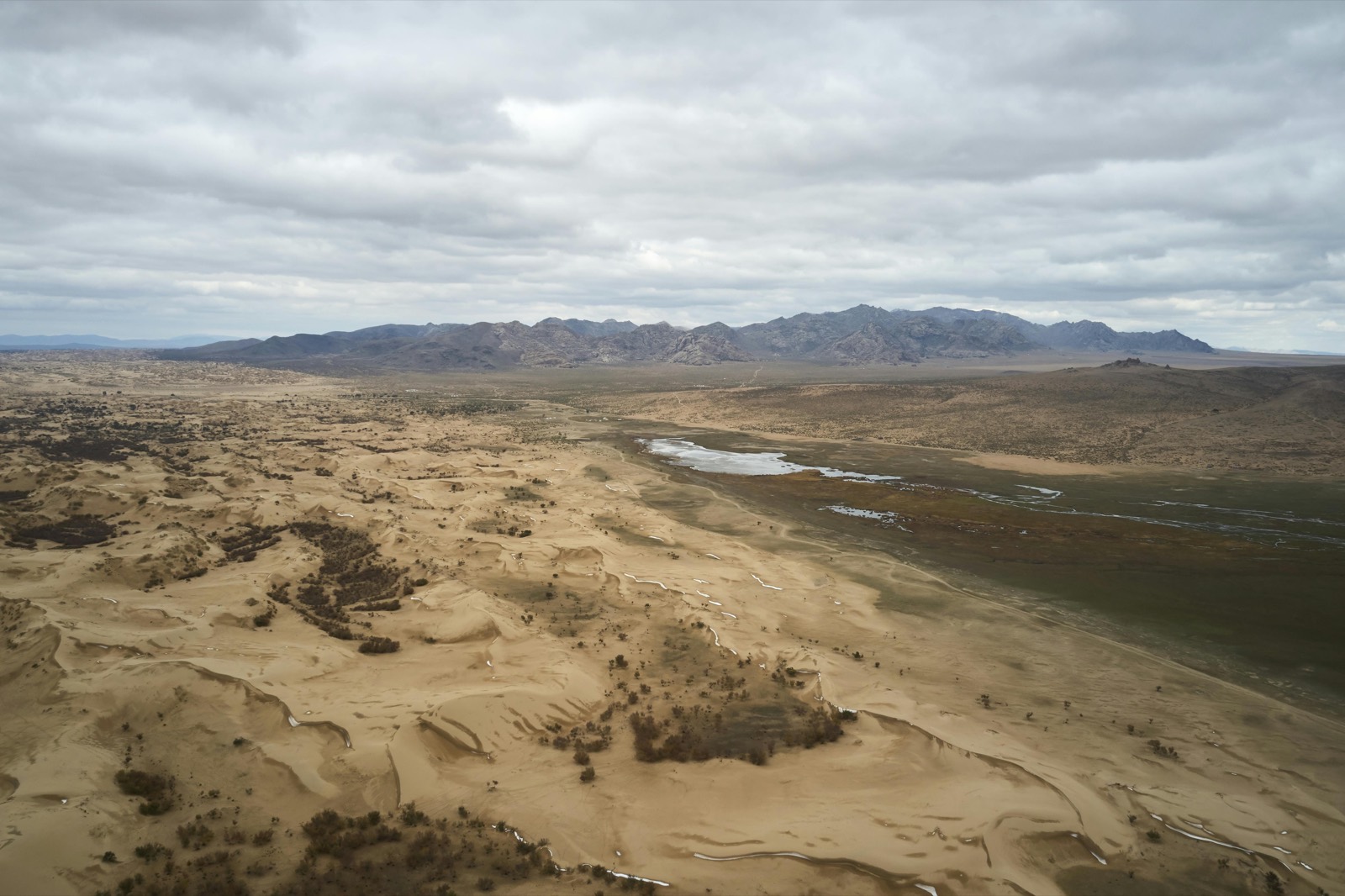
Rangeland degradation does not look the same everywhere.
Mongolia's rangelands span Forest Steppe, Steppe, Desert Steppe, Desert, and High Mountain systems, each with distinct ecological site groups (ESGs), plant communities, biomass potentials, and carrying capacities. What may appear "degraded" to the eye (i.e. sparse vegetation, dry conditions, lower greenness) may actually represent the healthy state of a specific ecological zone or rangeland type.
Thus, greenness alone is not sufficient to identify transition into degraded states in different ecological zones. In Example 1, the reference state and degraded state both remain heavily vegetated, but differ in species composition, ecological function, biomass productivity, and resilience. A landscape can remain and even appear "green" despite undergoing ecological degradation. On the other hand, in Example 2, the reference state appears as sparsely vegetated as its degraded state, even while maintaining the exact same biomass yield and carrying capacity!
This is why remotely sensed indicators such as NDVI alone are insufficient for evaluating rangeland health. Ground-truth ecological data (specifically on species composition, biodiversity shifts, biomass yield, and carrying capacity) are essential for assessing ecosystem condition and resilience.
Mongolia's State and Transition Model on Rangelands is one of the most comprehensive efforts to codify these dynamics at a national scale, and an important reminder that context matters deeply in rangeland monitoring.