

← Back to Insights
In the Field: Connecting with Herders
By Oyut Amarjargal · September 11, 2026
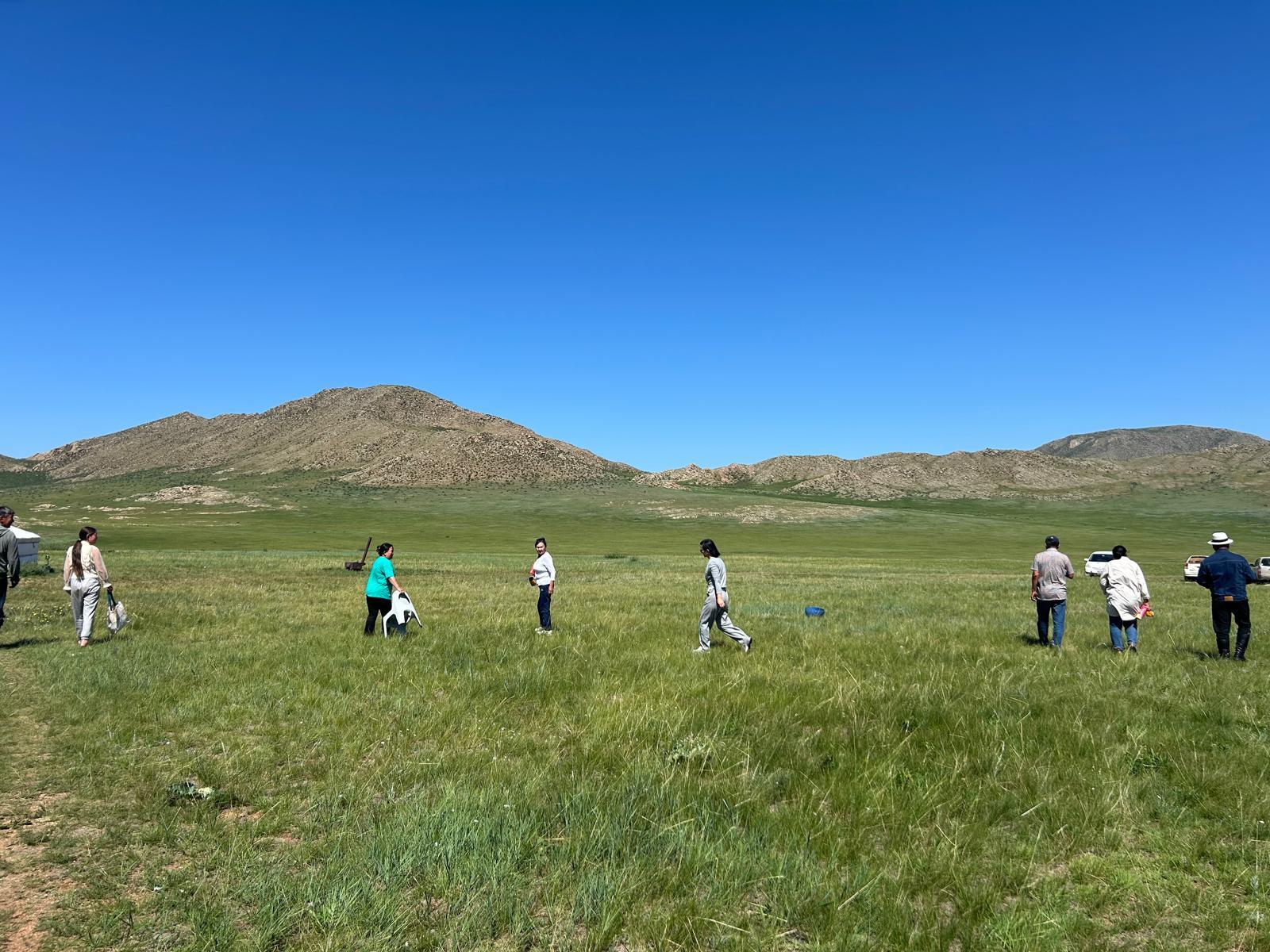
Update from the field: We had a wonderful and lively conversation with five herder families in Khentii aimag.
We were especially curious to hear from these families because they are 5 of 11 families that are part of a nokhorlol, or pasture user group (PUG) - grassroots herder organizations that collectively manage rangelands, promote sustainable livestock practices, and work to prevent overgrazing.
We asked them about the physical indicators they use to assess rangeland degradation, and several themes stood out.
Plant diversity and quality matter. One herder wondered whether the plants that are supposed to be growing are actually growing, while another observed that some livestock are no longer gaining weight from the available pasture as they used to.
Climate patterns are becoming harder to rely on. The herders described how precipitation, humidity, wind direction and pressure, and early spring growing periods were traditionally used to anticipate conditions. But these patterns have become increasingly unpredictable, making it harder to anticipate drought and dzud risk.
Green does not necessarily mean good pasture. The herders primarily assess pasture quality by observing plant diversity and quality, the presence and proportion of sharilj (weeds that can overpower other plants), and how livestock interact with the available pasture - including whether animals are able to gain sufficient weight.
For winter and dzud risk, preparation often means hedging against uncertainty by purchasing hay. One herder shared that she once bought two porter trucks of hay, only for the winter to be mild enough that she didn't need it and ultimately had to throw it away.
Interestingly, the herders also agreed that visually green pasture is not necessarily healthy pasture; it can simply be sharilj.
This further supports an important hypothesis we're exploring at GreenZun: NDVI, which measures vegetation greenness from satellite imagery, cannot by itself tell us whether a rangeland is ecologically healthy. Mapping greenness across Mongolia without ecological context can therefore be misleading.
Of course, this was only five families, within one pasture user group, in one soum, in one aimag. We recognize the limitations of extrapolating from such a small field sample.
Regardless, we believe these conversations are an important stepping stone toward connecting rangeland health, local knowledge, and applied science and technology - an area where we see a significant gap.
We still have so much to learn, and we're also super excited to continue the journey and keep building GreenZun.
Follow us for more updates from our work ahead!